
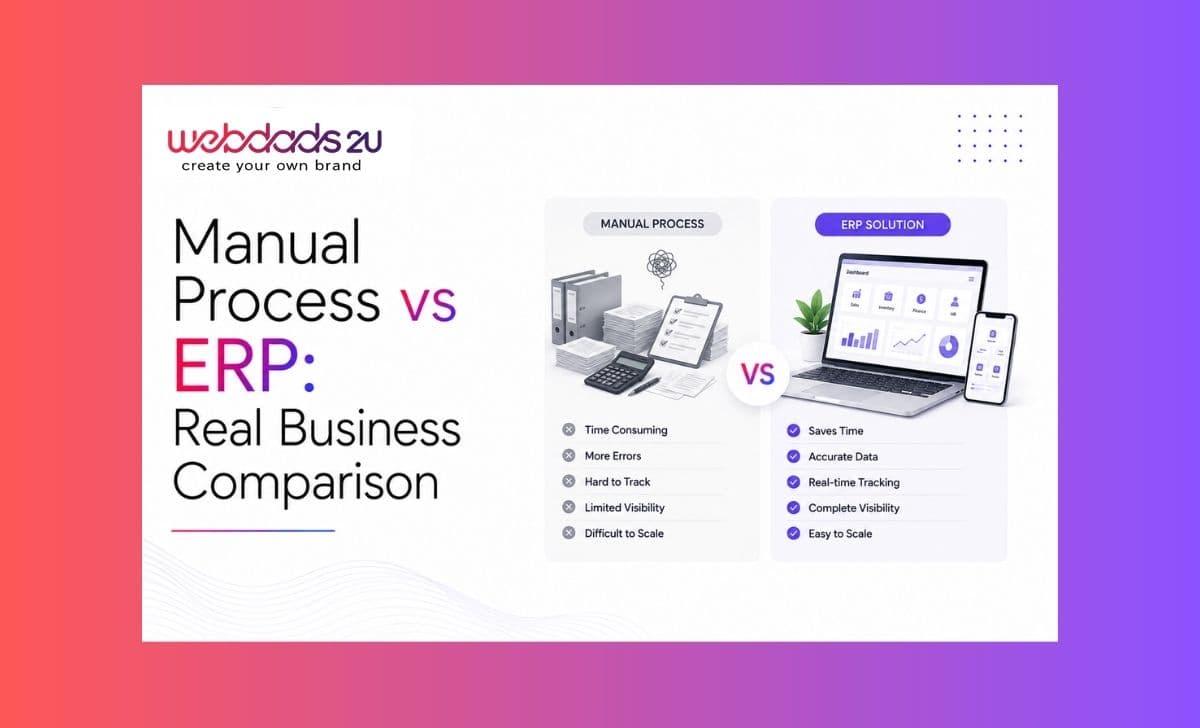
Many businesses still use manual processes to manage daily work. But as work increases, manual methods can create problems. ERP systems help manage everything in one place. Understanding the difference between manual work and ERP helps you choose the better option for your business growth.
What Is a Manual Process?
A manual process means doing work by hand or using simple tools like paper or spreadsheets. It depends on people to complete tasks. While it may work for small businesses, it becomes difficult as the business grows.
What Is ERP System?
ERP stands for Enterprise Resource Planning. It is software that manages different business activities in one system. It helps track sales, inventory, finance, and more. ERP makes work faster and more organized.
Speed Comparison
Manual processes take more time because tasks are done step by step by people. ERP systems complete tasks quickly using automation. Faster work helps businesses save time and improve productivity.
Accuracy and Errors
Manual work can lead to mistakes, especially when handling large data. ERP reduces errors by automating processes. Better accuracy helps businesses avoid problems and make better decisions.
Data Management
In manual systems, data is often stored in different places. This makes it hard to find information. ERP keeps all data in one system, making it easy to access and manage.
Team Collaboration
Manual processes can create communication gaps. ERP improves teamwork by sharing information in real time. This helps teams work together more smoothly.
Business Growth Support
Manual systems may not support business growth. As work increases, managing tasks becomes difficult. ERP systems are designed to grow with your business and handle more work easily.
Cost Comparison
Manual processes may seem cheaper at first but can cost more over time due to errors and delays. ERP may require an initial investment but saves money in the long run by improving efficiency.
Decision Making
Manual systems do not provide clear data for decisions. ERP gives reports and insights that help businesses make better decisions quickly.
Security and Data Safety
Manual data storage can be risky. Files can be lost or damaged. ERP systems offer better security and protect important business data.
Flexibility and Automation
Manual work needs more effort and time. ERP offers automation and flexibility. It helps businesses complete tasks easily and adjust to changes quickly.
Upgrade Your Business with Smart ERP Solutions
Moving from manual processes to ERP needs proper planning. Webdads2u helps businesses implement ERP systems that match their needs. The team focuses on simple use, better performance, and smooth integration. This helps businesses improve efficiency, reduce errors, and grow faster in a competitive market.
Conclusion
Is your business still using manual processes? It may be slowing your growth. ERP systems offer better speed, accuracy, and control. Switching to ERP can improve your business operations and help you grow successfully.
Solomon
Content Author · WEBDADS2U
Writing about software development, ERP systems, CRM solutions, and business technology at WEBDADS2U.