
Think about the last time you visited a business website. You probably wanted to find something specific, compare your options, or get in touch with the company. If the website was slow, confusing, or short on information, you may have looked elsewhere.
Your customers can have the same experience with your website.
A good website should make things easier for them. It should explain what your business does, answer their questions, and help them decide what to do next. Good design matters, but so do speed, content, security, and the overall experience.
For businesses planning to grow online, working with a Web Development Agency in Chennai can help turn these needs into a website that works for both customers and the business.
Let's look at what really makes a website successful.
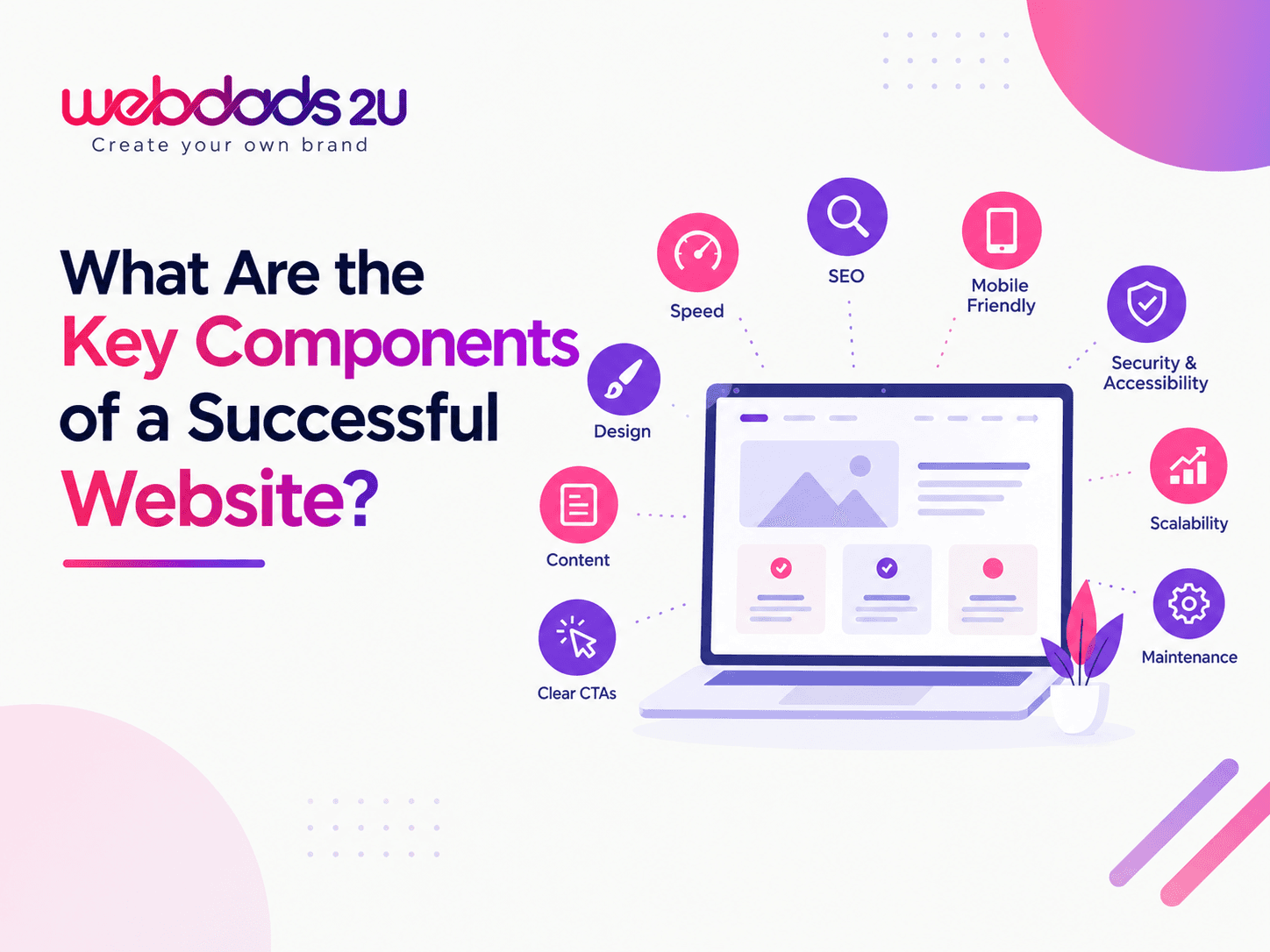
1. A Design That Makes Sense to Visitors
When someone lands on your homepage, they should not have to guess what your business offers. Your main message, services, and contact details should be easy to find.
Keep the layout simple. Use clear headings, readable fonts, consistent colours, and a menu that helps people move around the website without getting lost.
Before choosing colours or animations, think about your customers. What are they looking for? What information do they need before contacting you? Answering these questions helps create a website that looks good and serves a clear purpose.
2. Fast Loading Speed
Nobody wants to wait several seconds just to open a page. A slow website can frustrate visitors and make it harder for them to explore your services.
Large images, unnecessary scripts, and poorly optimised code are common causes of performance problems. Optimising images, improving code, and choosing reliable hosting can help.
Google's Core Web Vitals measure three aspects of user experience: loading performance, responsiveness, and visual stability. Its recommended targets are LCP of 2.5 seconds or less, INP of 200 milliseconds or less, and CLS of 0.1 or less, measured at the 75th percentile of visits.
These measurements are useful for identifying problems, although meeting the targets does not guarantee higher rankings.
3. Content That Answers Real Questions
Your visitors are not looking for paragraphs filled with marketing language. They want to know whether your product or service meets their needs.
Explain what you offer, who it is for, how your process works, and how people can get started. Depending on your business, useful content might include service pages, FAQs, practical blog posts, pricing information, and genuine customer experiences.
For example, a web development company should explain its services and development process clearly instead of simply claiming to deliver the best solutions.
Google's people-first content guidance also encourages businesses to publish helpful, reliable information that offers genuine value. Write for your audience first and use keywords naturally.
4. SEO That Helps Customers Find You
Even a useful website needs to reach the right audience. Search engine optimisation helps search engines understand your pages and connect them with relevant searches.
Start with clear page titles, descriptive headings, useful internal links, relevant keywords, and a logical website structure. Make sure important pages can be crawled and indexed.
For businesses serving Chennai, local relevance is worth considering. Keep your business information accurate and create service content that reflects the needs of your actual audience.
If you want to reach people searching for a Web Development Agency in Chennai, include that phrase naturally in relevant content. Avoid repeating it simply to make the page appear more optimised.
Good SEO is about helping the right people find useful information, not just increasing traffic.
5. A Website That Works on Mobile
Many customers will visit your website from their phones. They should be able to read your content, explore your services, and contact you without struggling with tiny text or awkward layouts.
Make sure buttons are easy to tap, forms are simple to complete, and important information is easy to access. Test the website on different screen sizes before launch.
A mobile-friendly website is not just a smaller version of a desktop website. It should make the most important information and actions easy to find on a smaller screen.
6. Security and Accessibility
People need to trust your website before they share personal details or make a purchase.
HTTPS, secure forms, regular software updates, and reliable backups are important parts of maintaining a secure website. Clear contact details, genuine reviews, and an understandable privacy notice can also help visitors feel more confident.
Accessibility matters just as much. Readable text, good colour contrast, keyboard navigation, and appropriate descriptions for informative images help more people use your website.
The W3C's WCAG 2.2 guidelines provide practical recommendations for making websites more accessible.
These details may not always be the first things visitors notice, but they contribute to a better and more dependable experience.
7. Clear Calls to Action
Imagine a visitor likes your services but cannot figure out how to contact you. That is an avoidable problem.
Give visitors a clear next step. Depending on your business, this could be “Get a Quote,” “Book a Consultation,” “Contact Us,” or “Buy Now.”
Place these actions where they make sense, such as after explaining a service or answering a common question. Keep forms short and ask only for the information you need.
You should also track enquiries, calls, and purchases to understand whether your website is helping the business achieve its goals.
8. Technology That Can Grow With Your Business
Your website should not become difficult to manage as your business expands.
You may eventually want to add new service pages, publish articles, accept online payments, or connect your website to a customer management system. A suitable content management system (CMS) and well-planned development can make these changes easier.
The technology should match your needs and budget. A small business website does not require the same setup as a large online store.
A good development team will explain the available options and help you choose a solution that is practical to maintain and flexible enough for future needs.
9. AI and the Changing Way People Search
Search is changing as AI-powered tools help people find answers and explore topics. Businesses should pay attention to these developments without assuming they need to rebuild their websites around AI.
Google's guidance for AI-powered search continues to emphasise useful content and established SEO practices. Clear explanations, accurate information, logical page structures, and accessible content remain important.
Businesses can also explore AI-powered search or customer-support tools when these genuinely help visitors. For example, a large online store might benefit from a tool that helps customers find suitable products.
However, AI is not necessary for every website. Start with the problems your customers face, then decide whether new technology can solve them.
10. Regular Maintenance and Improvement
A website is not a one-time project. Services change, information becomes outdated, and technical problems can appear over time.
Check your website regularly for broken links, outdated content, security issues, and slow pages. Analytics can help you understand which pages attract visitors, where people leave, and which actions lead to enquiries.
You do not always need a complete redesign to improve results. Sometimes, clearer wording, a simpler form, or better navigation can make a meaningful difference.
Use customer feedback and actual performance data to decide what needs attention.
How to Choose the Right Web Development Agency in Chennai
Choosing a development partner is about more than finding someone who can build an attractive website.
Look for an agency that understands your business, listens to your requirements, and can explain its approach to design, SEO, performance, and security. Review its previous projects and ask about timelines, ongoing maintenance, and support after launch.
It is also worth discussing how the website's success will be measured. Depending on your goals, that might mean more qualified enquiries, online sales, or better engagement with important pages.
The right partner should help you make sensible decisions rather than encourage you to add features you do not need.
Conclusion
A successful website does not need to be complicated. It needs to be easy to use, quick to load, useful to visitors, secure, and built around clear business goals.
Design, content, SEO, mobile usability, and ongoing maintenance all work together to create that experience.
If you are considering a Web Development Agency in Chennai, start by thinking about what your customers need from your website. Build around those needs, measure how well the website performs, and improve it as your business grows.
Ultimately, a website earns its value by helping real people find what they need and giving them a good reason to choose your business.
Solomon
Content Author · WEBDADS2U
Writing about software development, ERP systems, CRM solutions, and business technology at WEBDADS2U.